
-
26 October 2026
Case Study: Hearing the Pig Coming: Leapfrog Tracking of an MFL Run in West Texas
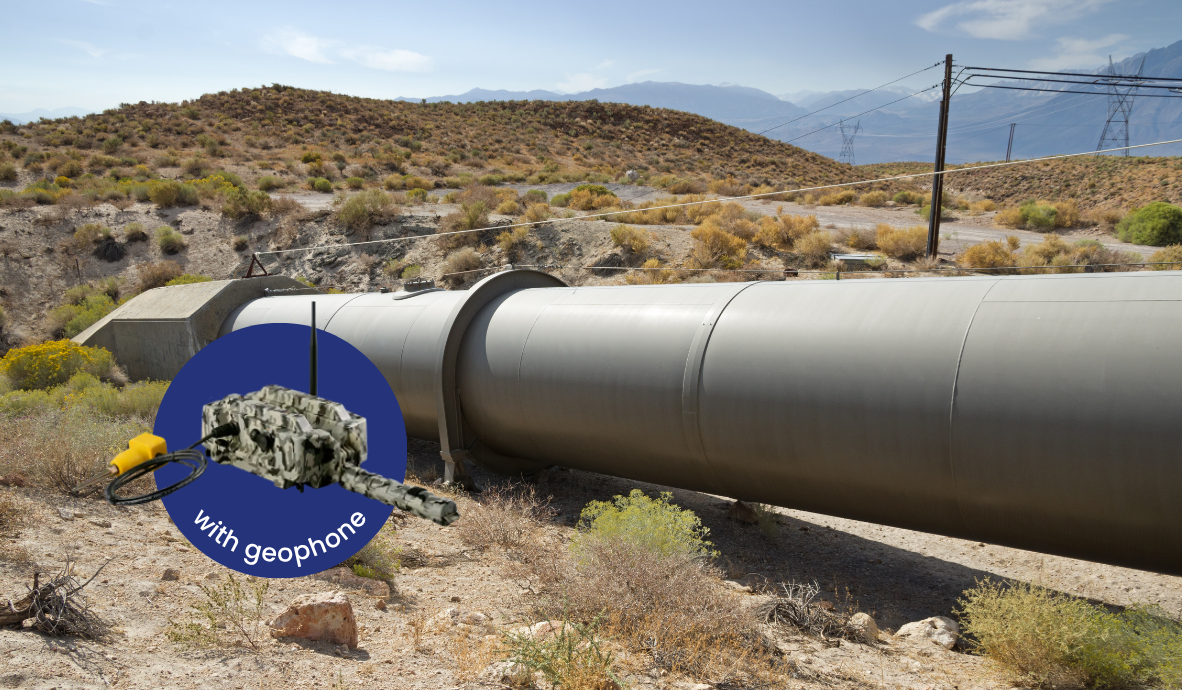
A third-party pig tracking company tracked a 2-mile MFL inline inspection run in West Texas using just two Propipe North America APEX Above Ground Markers (AGMs) fitted with geophones. The tool carried no transmitter, so the crew relied on the strong magnetic signature of the MFL tool itself, along with acoustic data from the geophones. The two APEX AGM units were leapfrogged along the line, and live data was streamed over cellular. Every passage was detected.
The Challenge
The crew had only two APEX AGM units to cover the whole run. On a 2-mile line, the tracking points are close together, so the pig doesn’t take long to travel between them.
Each unit had to be picked up and moved to the next location ahead of the pig. The crew needed to know exactly when to move, so they wouldn’t miss a passage. And because the MFL tool carried no transmitter, there was no electromagnetic signal to track.
The Solution
- Products: two APEX AGMs on cellular, each paired with a geophone.
- Deployment: the crew leapfrogged the two units ahead of the pig, from one tracking point to the next.
- Why it worked: the APEX detected the MFL tool’s strong magnetic signature, and the geophone let the crew hear the pig approaching. Streaming both live over cellular gave the crew real-time visual and audio confirmation, so they knew exactly when a unit was clear to move.
Implementation in the Field
At each location, the crew set up an APEX with its geophone and watched the live data stream. The geophone picked up the pig’s sound before it reached the marker, so the crew knew it was coming ahead of time.
Using the live visual and audio data, they worked out the pig’s speed before it arrived and used it to time each leapfrog move.
Results
- Every passage detected.
- Two units, full coverage: two APEX AGMs covered the entire 2-mile run by leapfrogging.
- Early warning: the crew heard the pig approaching before it reached each marker.
- Easy timing: pig speed was worked out ahead of time from live-streamed data, making each move easy to time.
Why It Matters for Texas Pig Runs
Not every run needs a marker at every tracking point. On short runs, a small crew with two well-equipped AGMs can cover the whole line by leapfrogging, as long as they know exactly when the pig will arrive. Combining magnetic detection with geophone audio means even a tool with no transmitter can be tracked with confidence.
Planning a pig run in Texas? Contact Propipe North America to learn more about geophone-equipped APEX AGMs for your next run.
Frequently Asked Questions
Yes. An MFL inspection tool has a strong magnetic signature, and APEX AGMs detect magnets as well as electromagnetic signals. On this West Texas run, the tool carried no transmitter, and the APEX units detected every passage using its magnetic signature plus acoustic data from geophones.
Leapfrog tracking means moving a small number of above ground markers ahead of the pig from one tracking point to the next, instead of placing a marker at every point. On this run, two APEX AGMs were leapfrogged to cover a 2-mile MFL run.
A geophone picks up the sound and vibration of the pig moving through the pipe. On this run, the crew heard the pig approaching before it reached each marker, which told them when it was coming and when the unit was clear to move.
Divide the distance between two tracking points by the time between passages. On this run, the crew used live visual and audio data streamed from the APEX units to work out the pig’s speed before it arrived, and used it to time each move.
It depends on the run length, the pig’s speed and how many people are in the field. On this 2-mile West Texas run, two APEX AGMs were enough because the crew leapfrogged them ahead of the pig.