
-
19 October 2026
Case Study: Satellite Pig Tracking in Mountain Terrain
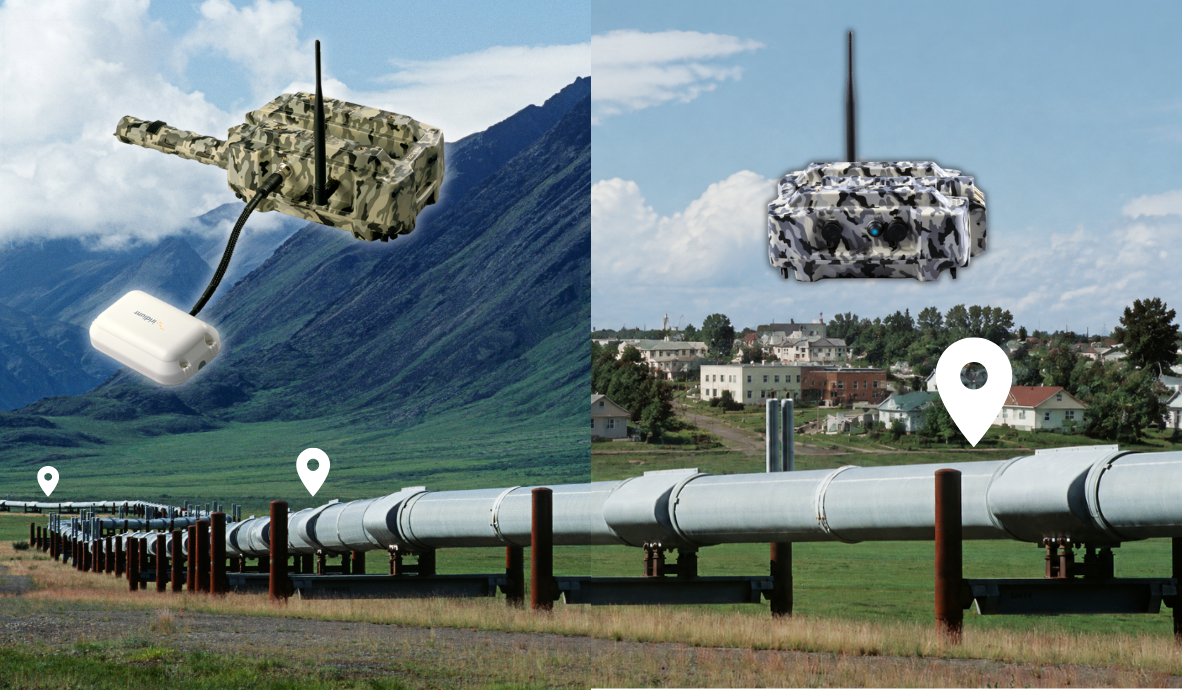
A third-party pig tracking company tracked an MFL inline inspection run on a mountain pipeline just outside Salt Lake City, Utah. Propipe North America’s APEX Above Ground Markers (AGMs) covered most of the tracking points: units near the city reported over cellular, and units in the remote mountain sections used Iridium satellite modules. The markers were hibernated after early deployment, woken remotely on run day, and all data was collected for the run.
The Challenge
The pipeline ran from the edge of the city out into mountain terrain, where much of the route had no cell coverage. The markers had to be in the field days before the run, which made battery life a concern. The remote sites were also slow to reach if anything needed attention. The tracking company needed reliable passage data along the whole line, without crews at every location.
The Solution
- Products: APEX Above Ground Markers (AGM), some on cellular and some fitted with Iridium satellite modules.
- Deployment: cellular units were placed closer to the city. Iridium-equipped units were placed farther out, where there was no cell coverage.
- Why it worked: pairing each site with the right communication method gave the crew live visibility across the whole route, including the mountain sections with no cell service.
Implementation in the Field
The crew placed the APEX AGM units a few days ahead of the run and put them into hibernate mode to save battery while they waited.
On the morning of the run, each unit was switched back to active mode remotely, over cellular or Iridium, with no return trips to the sites. Field personnel covered a few locations, and the APEX AGM units tracked the rest of the line as the 22 Hz transmitter on the MFL tool passed each marker.
Results
- All data collected for the MFL run.
- Remote sites with no cell coverage reported over Iridium satellite
- No site visits on run day: units were woken from hibernate remotely.
- Fewer crew in the field: APEX AGM covered most of the tracking points.
Why It Matters: Matching the Network to the Terrain
Few pipelines have cell coverage from end to end. Mixing cellular and satellite AGMs on one run means each tracking point uses whatever connection works there, and the crew still sees the whole route live. Hibernate mode and remote wake-up go together: markers can be placed well ahead of a run without draining batteries or sending crews back to hard-to-reach sites.
The same approach applies anywhere coverage is patchy, from mountain passes to remote stretches of Texas. Read Remote Pig Tracking for Texas Pipelines, our article on pig tracking in remote, extreme terrain, or our case study on unattended tracking with an offshore receiver.
Running pigs where the cell signal ends? Contact Propipe North America about cellular and satellite-equipped APEX AGMs for your next run.
Frequently Asked Questions about Pig Tracking with no Cell Coverage
Yes. APEX AGMs can be fitted with Iridium satellite modules. On this mountain MFL run, units in the remote sections with no cell service reported every passage over Iridium satellite.
Yes. On this run, APEX units near the city reported over cellular and units farther out in the mountains used Iridium satellite. All of them fed the same live tracking, so the crew saw the whole route in one place.
Put the units into hibernate mode after placing them. On this project, the APEX AGMs were deployed a few days early, hibernated to save battery, then switched back to active mode on the morning of the run.
Yes. On run day, each unit was woken from hibernate remotely over cellular or Iridium satellite, so no one had to drive back out to the remote mountain sites.
The MFL tool carried a 22 Hz transmitter, the industry-standard pig tracking frequency. APEX AGMs detect 22 Hz and programmable frequencies from 10 to 30 Hz.